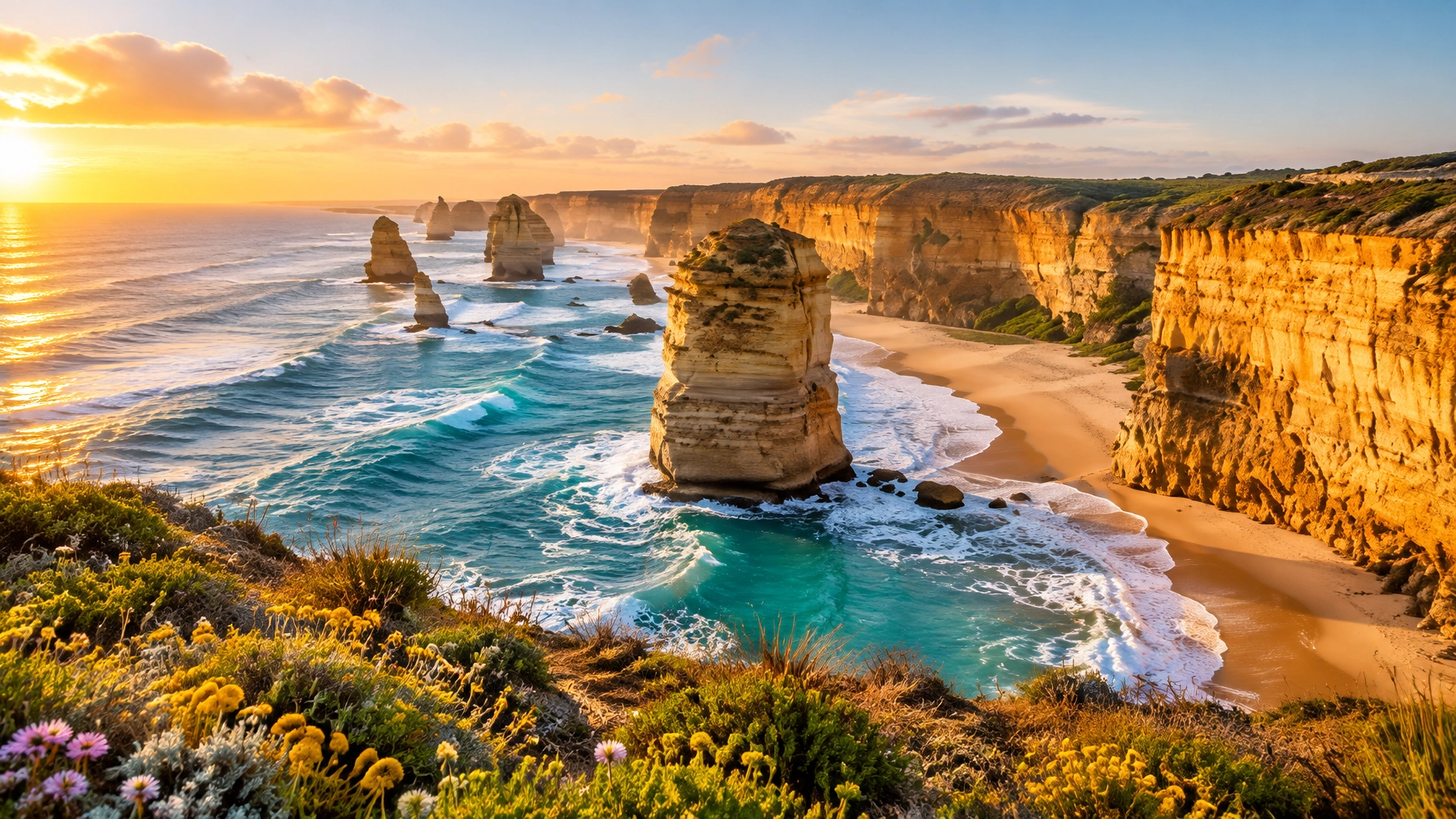
12 Apostles Tour from Melbourne: Spring Whale Season, Wild Lookouts & the Great Ocean Road Adventure
A 12 Apostles tour from Melbourne is more than a quick photo stop beside a famous rock formation. It is a full-day journey from city streets to rainforest, surf beaches, limestone cliffs and the untamed Shipwreck Coast.
In September, the Great Ocean Road feels especially alive. Spring wildflowers brighten the roadside, coastal walks are cooler and quieter than summer, and the final weeks of the Southern Right Whale season can bring unforgettable sightings near Warrnambool. Add Gibson Steps at low tide, the shipwreck stories of Loch Ard Gorge, dramatic London Bridge, and an optional helicopter flight, and you have one of Victoria’s most spectacular adventures.
Our Explore Great Ocean Road and 12 Apostles Day Tour takes approximately 12 hours, with an early start designed to help you experience more and avoid the busiest periods.
1. Start in Melbourne: the adventure begins before sunrise
Your day begins with an early pickup in Melbourne. As the city wakes, we leave the laneways and high-rises behind and travel towards the Surf Coast, where the landscape quickly opens into rolling farmland, coastal heath and wide blue horizons.
An early departure is one of the smartest ways to enjoy the Great Ocean Road. You have more daylight for scenic stops, a better chance of finding quieter lookouts and more flexibility if weather or tide conditions change.
Your spring tour essentials
- Approximate duration: 12 hours for the standard day tour
- Departure: Early morning from Melbourne
- Season: September to November
- Conditions: Mild spring weather with cool coastal winds
- Bring: Layers, a waterproof jacket, comfortable walking shoes, water and sun protection
- Optional upgrades: Private touring, extended itineraries and scenic helicopter flights
While a standard day tour focuses on the Great Ocean Road and 12 Apostles, travellers who want to include 12 Apostles whale watching at Logan’s Beach should consider a private or multi-day itinerary. Warrnambool lies farther west along the Shipwreck Coast, and adding it properly requires extra time rather than a rushed detour.
2. Follow the Great Ocean Road towards the wild coast
As we reach the coast, the road begins to curve between cliffs, beaches and forest. This is where a guided journey becomes part of the experience. Instead of concentrating on traffic, parking and navigation, you can watch the scenery unfold while our local guide explains the towns, landmarks and natural history along the way.
The road was built by returned servicemen between 1919 and 1932 as a memorial to those who served in the First World War. Every bend carries a little of that history, as well as a constantly changing view of the Southern Ocean.
Spring is an ideal shoulder season for the journey. Compared with summer, the major stops are generally less crowded, temperatures are comfortable for short walks and the landscape has a fresh green quality after winter rain.
For travellers searching for Melbourne winter day trips, the same route remains a brilliant cold-season escape. However, September adds longer daylight, spring colour and the possibility of late-season whale activity.
3. Logan’s Beach: a spring chance for whale watching
For a dedicated whale watching Great Ocean Road experience, we recommend continuing west to Warrnambool and Logan’s Beach. Between June and September, Southern Right Whales often return to this sheltered stretch of coast to calve and nurse close to shore.
September is the end of the traditional season, so sightings are never guaranteed. Early and mid-September usually offer the strongest chance, while late September should be treated as a rewarding possibility rather than a promise. A distant blow, a tail rising through the swell or a mother and calf moving along the shoreline can still become the defining moment of your trip.

At the Logan’s Beach viewing platform, bring binoculars and scan slowly. Look for:
- A sudden white puff of breath
- Dark shapes just below the surface
- A tail fluke lifting before a dive
- Birds gathering above areas of activity
- Calmer water close to shore where whales may rest
Our guides can help you understand what to look for and adjust the day’s plan around current conditions. The important thing is to enjoy the wildlife encounter responsibly: keep your distance, remain quiet and remember that nature sets the schedule.
4. Gibson Steps at low tide: step into the landscape
The coastline becomes increasingly dramatic as we approach the Twelve Apostles region. At Gibson Steps, a steep staircase leads from the clifftop down towards the beach, where the scale of the limestone cliffs becomes truly impressive.
At low tide, you may be able to walk along the sand with the towering cliffs behind you and offshore formations rising from the Southern Ocean. The view from below is entirely different from the famous clifftop platforms. You feel the wind, hear the surf reverberating against the rock and see layers of geological history exposed in the cliff face.

Why tide timing matters
Gibson Steps is not accessible in every condition. Gates may close during high tide, rough seas or unsafe weather, and wet steps can become slippery.
- Check the day’s tide and swell conditions
- Follow all signs and instructions from your guide
- Never walk close to the waterline when waves are surging
- Do not swim at Gibson Steps or the nearby beaches
- Be prepared for the stop to change if conditions are unsafe
We build flexibility into the day wherever possible. A guided tour means you do not have to make a risky decision simply because a place is printed on your itinerary.
5. The 12 Apostles: Victoria’s iconic coastal theatre
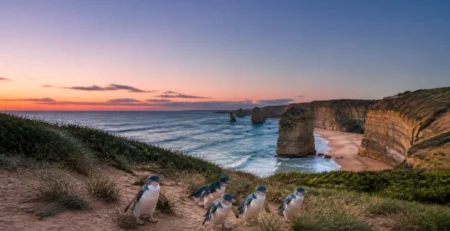
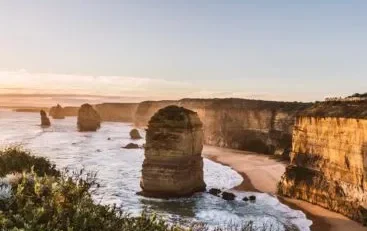
From the main viewing area, boardwalks lead towards one of Australia’s most recognisable landscapes. The Twelve Apostles rise from the ocean as immense limestone pillars, shaped over millions of years by wind, waves and erosion.
Despite the name, there have never been twelve visible stacks at the same time. The formations have changed as pillars collapsed and new sections of cliff were isolated by the sea. Their familiar name, however, has endured and helped make this one of Victoria’s most famous natural landmarks.
For the clearest photography, arrive early or plan for the softer light of late afternoon. Morning is usually best for quieter viewing, while sunset can bring warm colour across the cliffs and water. If your itinerary and weather allow, our guides can advise whether sunrise or sunset timing is the better choice on the day.
Camera tips for the Apostles
- Use a wide-angle lens to capture the stacks, cliffs and ocean together
- Include spring flowers, grasses or the boardwalk for foreground depth
- Keep the horizon level, especially when photographing from the platforms
- Use a fast shutter speed to freeze sea spray
- Shoot in bursts when waves strike the rocks
- Protect your camera from salt spray and sudden coastal showers
6. Loch Ard Gorge: where the coast tells its stories
After the Apostles, we continue through Port Campbell National Park to Loch Ard Gorge, one of the most atmospheric stops along the Shipwreck Coast.
The gorge takes its name from the Loch Ard, a clipper ship that ran aground in 1878 after sailing from England to Melbourne. Only two teenagers, Tom Pearce and Eva Carmichael, survived the wreck. Local tradition and memorials preserve their story, giving this spectacular natural setting a powerful human dimension.

Short walks lead to viewpoints over the gorge, cliffs and nearby rock formations. Take time to listen to the surf echo through the limestone and notice how quickly the mood of the coast can change: from bright turquoise water to dark, stormy swells.
Stay behind barriers and never enter the water. The Shipwreck Coast is beautiful precisely because it is powerful and exposed.
7. London Bridge and the final wild lookouts
Further west, London Bridge, now officially known as London Arch, offers another striking example of coastal erosion. The natural arch once connected to the mainland at both ends, forming a bridge over the sea. In 1990, the inner span collapsed, leaving the isolated offshore arch visible today.
It is a reminder that the Great Ocean Road is not a static postcard. Every year, waves continue to reshape the cliffs and stacks. The view you photograph today may look different decades from now.
Depending on your tour style and available time, we can also include additional Shipwreck Coast lookouts, coastal walks or wildlife stops. Our 12 Apostles and Otway Adventure Tour extends the experience with a longer adventure format, while private charters allow more flexibility for families, photographers and groups.
8. Add a helicopter flight for the ultimate perspective
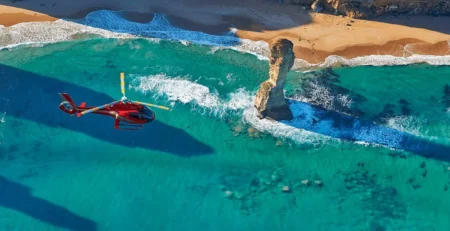
For an unforgettable thrill, consider an optional helicopter flight over the 12 Apostles. From the air, the formations are no longer separate lookout points: they become part of a vast sculpted coastline stretching beneath you.

You can see the contrast between the golden cliffs, deep blue water, sandy coves and isolated limestone stacks in a single sweeping view. Flights are weather-dependent and subject to availability, so ask us about the option when planning your tour or check on the day.
Why choose a guided 12 Apostles tour from Melbourne?
Self-driving gives you independence, but the Great Ocean Road is a long and demanding day behind the wheel. A guided tour lets you enjoy the scenery rather than navigate every bend.
With us, you benefit from:
- Local knowledge of viewpoints, road conditions and seasonal wildlife
- A carefully planned route from Melbourne and back
- Safer decisions around tides, surf and changing weather
- Stories that bring the Shipwreck Coast to life
- More time to walk, photograph and explore
- Options for group tours, private charters and extended packages
You can concentrate on the adventure while we manage the logistics.
Plan your spring escape
Bring layers, comfortable shoes, a windproof jacket, sunscreen and a camera with spare battery power. Check tide conditions before Gibson Steps, keep whale sightings in perspective and allow the coast to surprise you.
Whether you are visiting for the iconic Apostles, hoping for 12 Apostles whale watching, or seeking a complete spring road trip through Victoria, we can help shape the experience around your timing and interests.
Book your 12 Apostles tour from Melbourne with Great Ocean Road Trip Melbourne and turn one spectacular day into a story you will remember for years.


Leave a Reply
You must be logged in to post a comment.