12 Apostles Tour from Melbourne: Spring Whale Watching, Wild Cliffs & the Ultimate Great Ocean Road Adventure
Meta description: Plan a 12 Apostles tour from Melbourne in September for wild cliffs, spring whale watching opportunities, iconic lookouts and expert local guidance.
September is a spectacular time to leave Melbourne behind. Spring brings fresh green growth to the Otways, crisp coastal air, longer daylight and the possibility of spotting migrating whales along Victoria’s southern coastline.
On our 12 Apostles tour from Melbourne, you travel from city streets to surf beaches, rainforest, dramatic limestone cliffs and the wild Southern Ocean: all in one unforgettable day. We take care of the driving, route planning and timing, so you can focus on the views, photographs and stories that make the Great Ocean Road famous around the world.
If whale watching is high on your list, we will also explain how to make the most of your chances without promising something nature cannot guarantee.
Before You Leave Melbourne: Prepare for a Big Day
A classic Great Ocean Road and 12 Apostles day trip is a full-day adventure. The coastline is approximately 275 kilometres from Melbourne, and the journey includes plenty of scenic stops along the way.
Most travellers should expect:
- Departure: Usually around 7:00–7:35 am for a full-day tour
- Return: Approximately 8:00–9:00 pm
- Driving and sightseeing: Around 11–13 hours in total
- Best season: September to November for mild spring conditions
- Tour options: Group tours, private charters and extended multi-day packages
We recommend wearing comfortable walking shoes and bringing layers. Spring weather can shift quickly on the Shipwreck Coast, where sunshine, wind and showers may arrive within the same afternoon.
Pack:
- Windproof or waterproof jacket
- Warm layers and comfortable shoes
- Reusable water bottle
- Snacks and a packed lunch if not included in your tour
- Hat, sunglasses and sunscreen
- Camera or fully charged phone
- Binoculars for possible coastal wildlife sightings
Our 1 Day Package Tour is ideal if you want to experience the classic route without the stress of navigating unfamiliar roads.
7:00 am: Depart Melbourne and Chase the Coast
As Melbourne wakes up, we set off towards the Surf Coast. The city gradually gives way to open farmland, eucalyptus woodland and the first glimpses of the ocean.
One of the reasons a guided tour makes this journey easier is that you can relax during the long stretches between destinations. Rather than watching traffic, checking maps and searching for parking, you can listen to local stories, share the excitement with fellow travellers and keep your eyes open for kangaroos, parrots and koalas.
The Great Ocean Road itself carries remarkable history. It was built by returned First World War servicemen and dedicated as a memorial to those who served. Today, the road is celebrated as one of Australia’s most scenic touring routes, but every curve also carries a connection to the people who carved it through this rugged landscape.
As we approach towns such as Torquay, Lorne and Apollo Bay, the scenery changes constantly. There are sandy beaches, forested hills, colourful surf breaks and cliff-edge viewpoints where the Southern Ocean stretches far beyond the horizon.

Morning Stops: Surf Beaches, Forest and Wildlife
A well-planned Great Ocean Road itinerary is about much more than rushing to the Twelve Apostles. The journey is part of the adventure.
Depending on your chosen route and conditions, we may stop for coastal photographs, a short walk or refreshments in one of the region’s seaside townships. Apollo Bay is a favourite place to pause, with its broad beach, mountain backdrop and relaxed coastal atmosphere.
Further inland, the road enters the Great Otway National Park. The mood changes immediately. Salt air gives way to the scent of damp earth, ferns and towering eucalypts. Short rainforest walks reveal moss-covered trunks, dense undergrowth and small waterfalls hidden in the gullies.
This contrast is one of the Great Ocean Road’s great surprises: within a few hours, you can move from bright coastal sunlight into cool, emerald-green rainforest and then back out to the exposed cliffs of the Shipwreck Coast.
Our local guides help you make the most of these stops by explaining where to walk, what wildlife to look for and how long to spend at each viewpoint. We also adjust the day when weather, road conditions or visitor numbers make another stop a better choice.
Early Afternoon: Arrive at the 12 Apostles
Eventually, the landscape opens dramatically. The low scrub falls away, the cliffs rise higher and the ocean begins to dominate the view.
Then you reach the famous 12 Apostles.
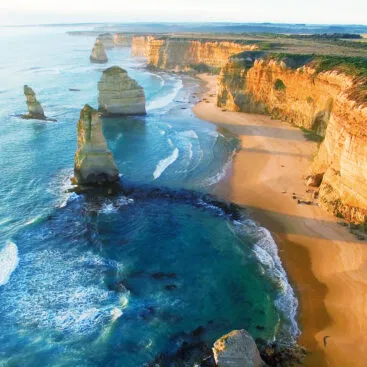
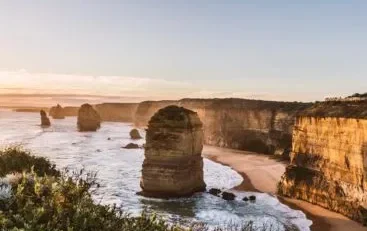
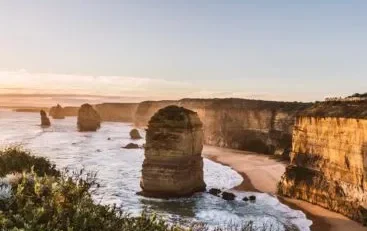
These towering limestone stacks were once connected to the mainland cliffs. Over thousands of years, waves and wind carved caves into the cliffs, then arches, and eventually isolated pillars standing offshore. Some formations have collapsed over time, so the name is now a historic title rather than an exact count.
The official 12 Apostles information page notes that seven of the original named stacks remain, while continual erosion continues to reshape the coastline.
From the viewing platforms, the formations rise from the blue-green water like enormous natural sculptures. On a clear September day, the colours can be intense: pale limestone, deep ocean blue, green coastal vegetation and white surf breaking around the bases of the stacks.
The main viewing area is accessible via sealed paths and boardwalks. Allow at least 45 minutes for the principal lookout, although we prefer to give you longer when the itinerary allows.

Insider timing tip
If avoiding crowds is important, a reverse itinerary can be a smart choice. Travelling inland first allows us to reach the Apostles earlier, when the light is softer and the viewing platforms are often calmer.
Sunset can create spectacular golden colour across the cliffs, but it is also a popular and busier time. In September, a morning visit often gives you a more peaceful experience and better space for photography.
The Shipwreck Coast: Gibson Steps and Wild Cliffs
After the main lookout, we continue through Port Campbell National Park to explore more of the Shipwreck Coast.
At Gibson Steps, conditions permitting, you can descend towards the beach and look up at immense limestone cliffs from sea level. The scale is humbling. From the sand, the cliffs feel less like scenery and more like a natural amphitheatre shaped by the power of the ocean.
Beach access depends on tides, weather and ocean conditions, so always follow local signs and your guide’s advice. The Southern Ocean is powerful, and the coastline should be admired from safe, designated areas.

We then explore Loch Ard Gorge, one of the most atmospheric stops on any 12 Apostles tour from Melbourne. Here, narrow channels, offshore stacks and towering ochre cliffs surround a sheltered stretch of sand.
Loch Ard Gorge is also one of the region’s most famous shipwreck sites. In 1878, the clipper ship Loch Ard struck nearby cliffs after a voyage from England. Only two young survivors, Eva Carmichael and Tom Pearce, reached shore. Their story remains part of the coast’s powerful maritime history.
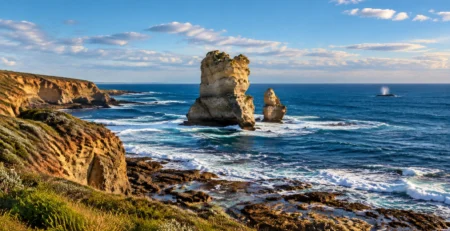
The wider Shipwreck Coast contains more than 200 known wrecks between Cape Otway and Port Fairy. As you walk between the lookouts, it is easy to understand why early sailors found this coastline so dangerous: and why it remains so visually compelling today.

September Whale Watching on the Great Ocean Road
September can be a rewarding month for whale watching Great Ocean Road experiences. Southern right whales and humpback whales pass along parts of Victoria’s southern coastline during the cooler months, with sightings commonly associated with the broader May–October period.
However, it is important to understand the difference between a dedicated whale-watching excursion and a scenic coastal tour.
A standard 12 Apostles day tour does not guarantee a whale sighting. You may spot a blow, tail or breaching whale from a headland, but whales are wild animals and can remain well offshore.
For the best chance of land-based sightings, travellers often spend extra time further west around Warrnambool, Port Fairy or Portland. Warrnambool’s Logans Beach is particularly well known for seasonal southern right whale observations.
If you want dedicated 12 Apostles whale watching, we recommend choosing an overnight or multi-day itinerary. This gives you time to enjoy the Apostles and Shipwreck Coast at a relaxed pace, then continue west for additional wildlife opportunities rather than trying to squeeze everything into one long day.
Explore our private and group charter options if you want a more flexible schedule, or consider a private two-day Great Ocean Road tour.
Optional Adventure: See the Coast from Above
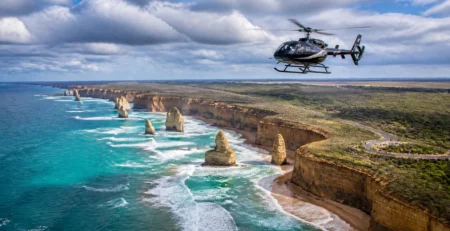
For an entirely different perspective, consider adding a scenic helicopter flight over the Twelve Apostles. From above, the coastline reveals its full scale: offshore stacks, long beaches, deep-blue channels and cliffs stretching into the distance.
A flight is optional and subject to availability and weather, but it is one of the most memorable ways to appreciate how the Southern Ocean has shaped this landscape. You can learn more about our Twelve Apostles scenic helicopter flight.

Evening: Return to Melbourne with the Coast Behind You
By late afternoon, we begin the return journey. Depending on the itinerary, we may travel back along the inland route or continue enjoying selected Great Ocean Road viewpoints before heading towards Melbourne.
The return is often a quiet part of the adventure. After a day of sea air, walking and dramatic scenery, you can settle into the vehicle and watch the landscape change from coastal cliffs to farmland and city lights.
A full-day tour is undeniably long, but it removes the biggest challenges of self-driving: navigation, fatigue, parking, timing and deciding which stops are genuinely worth your time.
Book Your Spring Great Ocean Road Adventure
Whether you are travelling solo, backpacking with friends, visiting Melbourne with family or organising a private group experience, we can help shape the right itinerary.
Choose:
- A classic one-day 12 Apostles tour from Melbourne
- A private charter with flexible sightseeing time
- An overnight trip for a stronger whale-watching opportunity
- A multi-day package combining the coast with wildlife, regional food and adventure activities
Spring is an excellent time to experience the Great Ocean Road: the cliffs are wild, the forests are fresh and the coastline is alive with possibility.
Contact Great Ocean Road Trip Melbourne to plan your September adventure and let our local team handle the details.


Leave a Reply
You must be logged in to post a comment.