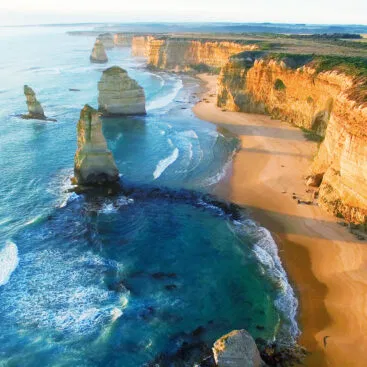
Great Ocean Walk: A Day-by-Day Guide to Victoria’s 104km Coastal Trail from Apollo Bay to the 12 Apostles
The Great Ocean Walk is one of Victoria’s most memorable multi-day walking experiences: a spectacular coastal trail linking Apollo Bay with the famous Twelve Apostles through beaches, eucalyptus forest, rainforest, clifftops and the historic Cape Otway region.
The route is commonly described as approximately 104km, although distances can vary slightly according to mapping and access points. The official journey is divided into eight stages, with seven hike-in campsites booked in advance through Parks Victoria.
This guide follows the walk chronologically, from the first steps in Apollo Bay to the final ocean views at the Twelve Apostles.

Before You Start: Planning the Great Ocean Walk
The Great Ocean Walk is a genuine multi-day hike rather than a series of roadside lookouts. You should be prepared to carry food, camping equipment and drinking water between designated sites, while managing steep sections, exposed beaches and rapidly changing coastal weather.
Key planning details
- Starting point: Apollo Bay Visitor Centre
- Finish: Twelve Apostles visitor area
- Duration: Eight official stages
- Campsites: Elliot Ridge, Blanket Bay, Cape Otway, Aire River, Johanna Beach, Ryans Den and Devil’s Kitchen
- Booking: Campsites must be booked in advance through Parks Victoria
- Facilities: Basic hike-in campsites, water tanks and limited amenities
- Camping: No campfires; use a suitable portable cooking system where permitted
- Reception: Mobile phone coverage is limited and unreliable
- Track access: Some sections pass through private farmland, where you must remain on the marked route
Pack light, but do not under-pack. Bring warm and waterproof layers, sun protection, a head torch, first-aid supplies, blister treatment and a reliable map or navigation app. Coastal weather can change quickly, so a bright morning does not guarantee a dry afternoon.
Water tanks are available at the campsites, but supplies and quality can vary. Carry enough water for each stage and treat tank water before drinking according to current Parks Victoria advice.
Day 1: Apollo Bay to Elliot Ridge, 10km
Your Great Ocean Walk begins in the seaside town of Apollo Bay, where the track leaves the coastal settlement and enters the Great Otway National Park.
The first day is a welcoming introduction to the trail. You will move between coastal scenery and forested sections, with the sound of the Southern Ocean gradually replaced by wind through tall eucalypts and temperate rainforest. At approximately 10km, you reach Elliot Ridge Campground, your first overnight stop.
Take this opening stage at a steady pace. It is the ideal day to test your pack, adjust your footwear and identify any early hot spots before they become blisters.
Day 2: Elliot Ridge to Blanket Bay, 12km
The second stage continues through coastal forest before opening towards Blanket Bay, one of the most attractive camping locations on the route.
Blanket Bay is known for its sheltered coastal setting and peaceful beach atmosphere. After walking for several hours beneath the forest canopy, arriving beside the water feels particularly rewarding. If conditions are calm, spend time exploring the shoreline before preparing dinner at camp.
Wear shoes with dependable grip. Even when the weather is dry, roots, damp forest floor and uneven track surfaces can make this stage more demanding than the distance suggests.
Day 3: Blanket Bay to Cape Otway, 11km
Today the trail leads towards Cape Otway, a region rich in maritime history, wildlife and rainforest.
Around Cape Otway, keep watch for koalas in the eucalypts and listen for native birdlife. The area also provides access to Melba Gully, famous for its glowworms and lush rainforest atmosphere. A visit may require careful itinerary planning, particularly if you are walking with a full pack.
The landmark of the region is the Cape Otway Lightstation, Australia’s oldest mainland lighthouse, first established in 1848. The heritage precinct is separate from the Great Ocean Walk campsite, so check opening times and allow sufficient time if you plan to visit.
Your overnight stop is Cape Otway Campground. This is a good stage for an early start, especially if you want to include the lightstation or rainforest attractions without rushing.

Day 4: Cape Otway to Aire River, 10km
The fourth stage turns towards Aire River, combining coastal clifftops, heathland and forest tracks.
The route feels increasingly remote as you move away from Cape Otway’s heritage attractions. Allow extra time for photographs, but keep your walking schedule realistic: daylight, tide conditions and river levels matter more than reaching every viewpoint.
At Aire River Campground, you are close to a waterway that can change with rainfall, surf and local conditions. Check current Parks Victoria advice before setting out and do not assume that every crossing will look the same as it did in photographs.
Day 5: Aire River to Johanna Beach, 14km
This is one of the more substantial stages, with approximately 14km of walking and significant climbs and descents before reaching Johanna Beach.
The final approach includes beach walking and the Johanna River crossing, making timing particularly important. Check tide tables, river conditions and surf forecasts before you leave Aire River. Aim to reach the beach section at a safe time and never attempt a crossing if the water is deep, fast-moving or affected by strong surf.
The setting at Johanna Beach Campground is one of the highlights of the walk. The campsite gives you the chance to rest near the coast, but the exposed location also means wind and weather can be noticeable overnight. Secure your equipment and keep food stored appropriately.
Day 6: Johanna Beach to Ryans Den, 14km
The trail from Johanna Beach to Ryans Den is a challenging day, with steep climbs, descents and outstanding views across the Southern Ocean.
You may encounter private farmland sections along this part of the route. Stay on the marked track, close gates behind you and respect fences, livestock and private property. The track is carefully designed to connect the coastal landscape with working rural land, so responsible walking is essential.
This is also a stage where footwear matters. Choose comfortable, broken-in boots or trail shoes with solid ankle and sole support. Carry blister patches and stop early to treat friction rather than waiting until the problem becomes painful.
Ryans Den Campground is a satisfying destination after a demanding day. Refill and treat water as required, prepare food efficiently and allow your body time to recover.
Day 7: Ryans Den to Devil’s Kitchen, 13km
The seventh stage covers approximately 13km between Ryans Den and Devil’s Kitchen Campground.
The landscape shifts between elevated coastal track, forest and dramatic ocean-facing viewpoints. You may pass near beach sections including Milanesia, where conditions can be influenced by tides, swell and weather. Follow the signed route and do not descend onto beaches unless access is clearly open and safe.
Snake sightings are possible in the Great Otway region, particularly in warmer weather. Stay on the track, watch where you place your feet and give any snake plenty of space. Do not try to handle or move it.
At Devil’s Kitchen, you are within reach of the final stage and the iconic Shipwreck Coast. Check your equipment, charge devices while you can and organise an early start for the next morning.
Day 8: Devil’s Kitchen to the Twelve Apostles, 16km
The final stage is approximately 16km and provides the grand finale: a long coastal journey towards the Twelve Apostles.
One of the memorable sections is Wreck Beach, where steps lead down towards the shoreline and the formations known as Gog and Magog. Beach access is strongly dependent on tide, swell and current conditions. Check local warnings before descending, and never become committed to a beach section without confirming that you can safely return or continue.
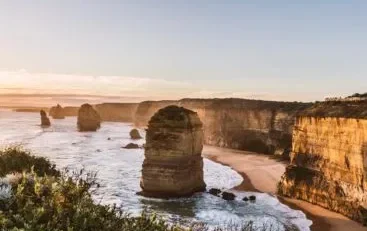
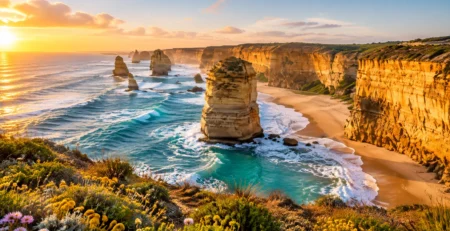
As you leave the more remote sections behind, the cliffs and sea stacks of the Shipwreck Coast begin to dominate the horizon. The final arrival at the Twelve Apostles is more rewarding because you have reached it on foot, one stage at a time.

Tide, Weather and Walking Safety
Three practical considerations deserve special attention:
- Johanna Beach: Plan the beach walk and Johanna River crossing around safe tide, river and surf conditions.
- Wreck Beach: Treat the stairs and shoreline as tide- and swell-dependent, not as a guaranteed detour.
- Aire River: Check water levels and current local advice before approaching the river area.
Wear layers rather than relying on one heavy jacket. A breathable base layer, insulating mid-layer and waterproof outer shell will help you manage sun, rain and wind. Keep your rain jacket accessible, not buried at the bottom of your pack.
Supported Great Ocean Walk Options from Melbourne
A self-sufficient hike is not the only way to experience this trail. We offer guided and supported Great Ocean Walk options, including private charter transfers, vehicle support and luggage assistance where suitable.
Our team can help coordinate:
- Melbourne transfers to Apollo Bay
- Pick-up from trail access points
- Vehicle support between walking stages
- Luggage transfers and accommodation planning
- A shorter self-guided section for limited time
- Beach, rainforest and Twelve Apostles day walks
- A private itinerary for families or small groups
For travellers searching for a Melbourne to Great Ocean Road multi day tour, this is an excellent way to combine dedicated walking with comfortable regional travel. We can also connect the walk with a 12 Apostles tour from Melbourne, the Grampians, Phillip Island, the Yarra Valley or Melbourne city.
Our Great Ocean Walk 4 Day tour is suitable for travellers who want a shorter walking experience, while our 5-day to 8-day package tour options allow more time to explore Victoria beyond the coast. For families, corporate groups and friends travelling together, our private charter and group tour service offers a more flexible approach.
We can also design a custom 10-day Victoria multi-city tour, linking Melbourne, Apollo Bay, the Twelve Apostles, the Grampians, Phillip Island and the Yarra Valley around your preferred walking distances and accommodation style.
Plan Your Great Ocean Walk
The Great Ocean Walk is best experienced with a realistic pace, careful tide planning and enough time to appreciate the places between the famous landmarks.
Tell us your preferred travel dates, group size and fitness level. We will help you choose between a complete eight-stage itinerary, a shorter section, a supported walking package or a private Victoria journey that combines the coast with the region’s other iconic destinations.
Contact Great Ocean Road Trip Melbourne to begin planning your route from Apollo Bay to the Twelve Apostles.


Leave a Reply
You must be logged in to post a comment.