Great Ocean Road Cycling Tour: A 3-Day Ride from Melbourne to the 12 Apostles Through Torquay, Lorne & the Otways
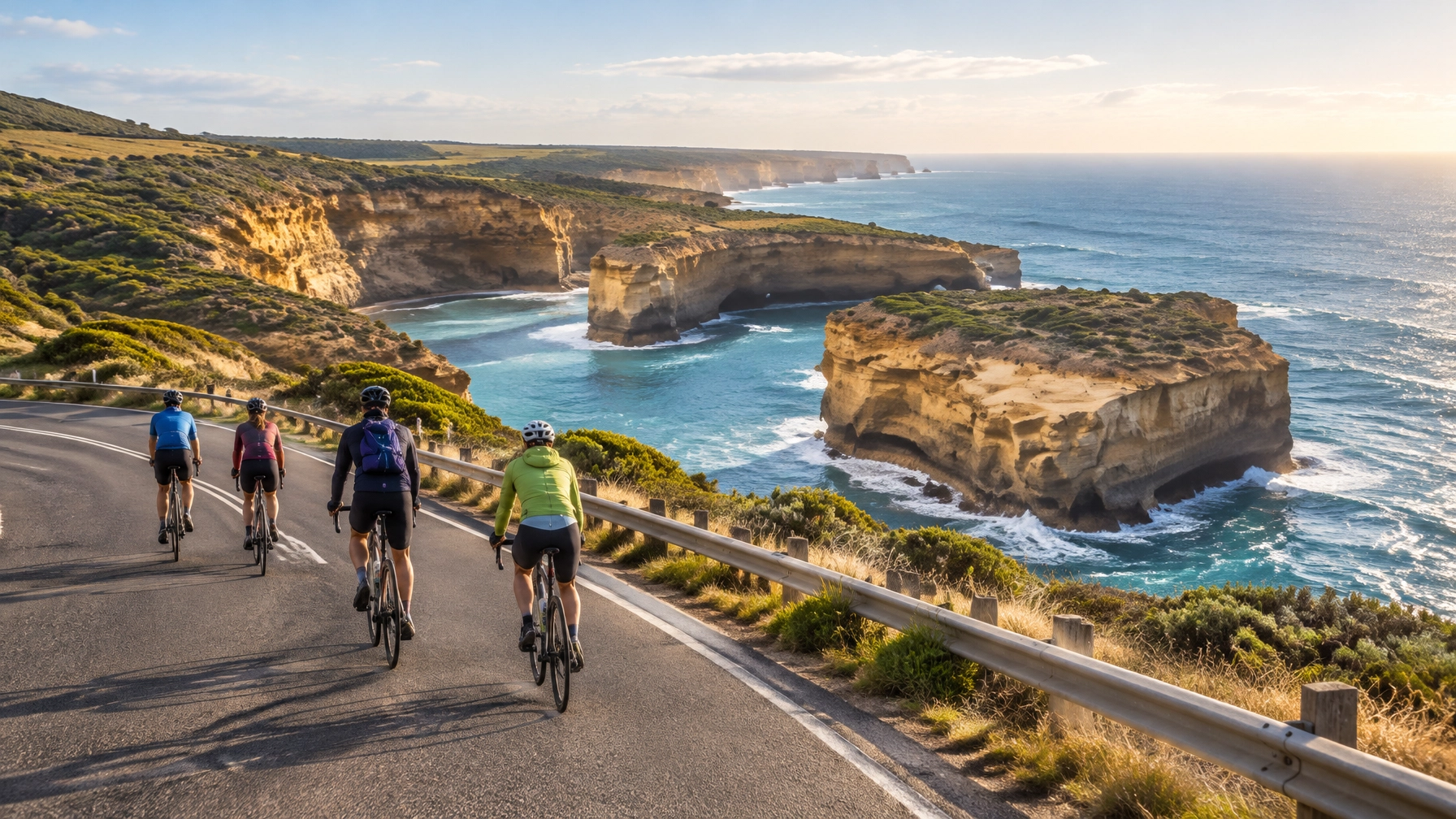
A cycling holiday along the Great Ocean Road offers something a coach window cannot: the salt air on your face, the steady rhythm of the pedals, the sound of surf below the cliffs and the satisfaction of earning every spectacular viewpoint.
Our three-day guided route begins with a transfer from Melbourne before following the coast from Torquay to Anglesea and Lorne, continuing to Apollo Bay, climbing through the forested Otways and finishing at the iconic 12 Apostles and Port Campbell.
It is an active, scenic and carefully supported alternative to a conventional 12 Apostles tour from Melbourne, designed for travellers who want to experience Victoria’s famous coastline at a human pace.
Before You Ride: A Road with a Remarkable Story
The Great Ocean Road is more than a beautiful route. Construction began in 1919 and was completed in 1932 by more than 3,000 returned First World War servicemen. The project provided employment for soldiers returning from the war and created a lasting memorial to their service.
It is recognised as Australia’s largest war memorial and is often described as the world’s largest war memorial. As you ride between the coastal towns, you are travelling along a remarkable piece of living history, built by hand through steep forest, cliffs and remote coastal country.
Our route also passes through the Great Otway National Park, a landscape of tall eucalyptus forest, fern gullies, waterfalls, heathland and remnant cool temperate rainforest. From surf beaches to moss-covered forest, the scenery changes almost constantly.
Day 1: Melbourne to Torquay, Anglesea and Lorne
Ride summary
- Starting point: Melbourne
- Transfer to Torquay: approximately 105 km by road
- Cycling route: Torquay to Anglesea and Lorne
- Approximate cycling distance: 46 km, depending on the selected route
- Ride time: approximately 3 to 4 hours, excluding stops
- Terrain: rolling coastal roads, short climbs and winding descents
- Overnight: Lorne
We begin with a supported transfer from Melbourne to Torquay, avoiding the busy urban approach and saving your legs for the most scenic section of the day. Torquay is the spiritual home of Australian surfing, and it is a fitting place to begin a coastal ride.
From here, we pedal towards Anglesea along the famous Great Ocean Road. The landscape opens quickly, with coastal heath, green headlands and glimpses of Bass Strait appearing between the trees. Depending on conditions and your group’s interests, we can pause near Bells Beach or take a relaxed break in Anglesea for coffee and refreshments.
The road between Anglesea and Lorne is wonderfully varied. You will pass windswept beaches, forested hills and lookout points where the Southern Ocean stretches towards the horizon. The route is not a continuous protected cycleway. It is a live public road shared with cars, coaches and motorhomes, which is why our guides manage the group carefully and adjust the pace to suit the conditions.
Lorne is an ideal first-night base. After checking into your accommodation, you can enjoy the village atmosphere, walk along the foreshore or relax over a well-earned dinner. This is the first evening of a genuine Great Ocean Road multi day tour, so there is time to recover rather than rushing straight back into a vehicle.
Day 2: Lorne to Apollo Bay and the Otway Forests
Ride summary
- Cycling distance: approximately 47 km from Lorne to Apollo Bay
- Ride time: approximately 3.5 to 5 hours, excluding stops
- Terrain: rolling coastal roads with longer climbs and descents
- Optional extension: Otways forest riding, subject to fitness, weather and road conditions
- Overnight: Apollo Bay
We leave Lorne with the ocean on one side and the Great Otway Ranges rising inland. This section is one of the most memorable rides on the entire coast. The road curves around rocky headlands, passes through small seaside settlements and climbs gently through eucalyptus forest before revealing another sweep of blue water.
The official regional cycling guide records substantially harder inland Otways routes, including sustained climbs averaging around 3% to 4%. Those figures are useful preparation because the coastal distance alone does not tell the whole story. Wind, gradients, traffic and repeated short climbs can make this a demanding day, particularly for riders carrying their own luggage.

The Great Otway National Park is one of Victoria’s most atmospheric landscapes. These forests are remnants of a once much broader cool temperate rainforest system, with tall trees, tree ferns, mossy gullies and dense green undergrowth. We may include a short forest detour or a guided nature stop, depending on the group’s energy and the day’s conditions.
The road towards Apollo Bay is also well known for wildlife. Keep your eyes in the tree canopy, especially around the Lighthouse Road turnoff and the forest corridors near Cape Otway. Koalas are frequently seen resting in manna gums and other eucalypts, although wildlife sightings can never be guaranteed. We always stop safely away from traffic and observe animals quietly from a respectful distance.

For travellers with extra time, Cape Otway Lightstation is a worthwhile optional experience. Built in 1848, it is recognised as the oldest surviving lighthouse on mainland Australia. Its position above the rugged coast reflects how challenging this coastline was for early shipping, particularly before modern navigation technology.
We finish in Apollo Bay, a relaxed seaside town with restaurants, beaches and comfortable accommodation. This is a good evening to refuel, check the bikes and prepare for the longest and most adventurous day of the journey.
Day 3: Apollo Bay Through the Otways to the 12 Apostles
Ride summary
- Cycling distance: approximately 91 km before local sightseeing detours
- Apollo Bay to Lavers Hill: approximately 51 km
- Lavers Hill to the 12 Apostles: approximately 40 km
- Ride time: approximately 6 to 8 hours, excluding sightseeing and meal breaks
- Terrain: longer climbs, forest roads, exposed sections and fast descents
- Finish: 12 Apostles and Port Campbell
Day three begins early. The route from Apollo Bay heads inland and climbs through the Otways before continuing towards Lavers Hill and the Shipwreck Coast. This is the most committing day of the tour, but it is also the day when the landscape becomes most dramatic.
As the forest thins, the scenery changes from dense green canopy to open farmland, wind-shaped vegetation and wide coastal views. The road feels increasingly remote, so we carry adequate food, water, repair equipment and communication gear. Our support plan also allows us to shorten the ride or use a vehicle transfer if weather, fatigue or road conditions make that the safest option.
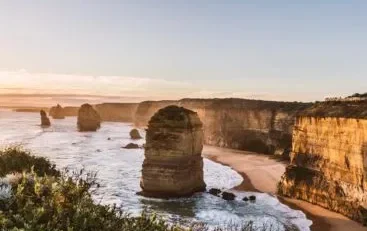
The final approach to the 12 Apostles is unforgettable. After hours of riding through forest and farmland, the Southern Ocean suddenly appears beyond the cliffs. The limestone stacks rise from the water like weathered sentinels, shaped over time by wind, waves and erosion.

We aim to reach the 12 Apostles early whenever possible. Early morning is cooler, calmer and generally less crowded than the middle of the day, when tour buses arrive from Melbourne. It also gives you softer light for photography and a better chance to stand at the viewing platforms without feeling rushed.
After exploring the 12 Apostles, we continue to Port Campbell for a celebratory meal and overnight stay. Depending on timing, we can also visit nearby Shipwreck Coast landmarks such as Loch Ard Gorge. This is the satisfying finish to a Melbourne to Great Ocean Road multi day tour that combines physical adventure with some of Victoria’s most famous landscapes.
Bike Hire and E-Bike Options
You do not need to fly to Australia with a high-end road bike. We can help arrange suitable bike hire, subject to availability and rider requirements.
Options may include:
- Hybrid or touring bikes for comfort and stability
- Road bikes for experienced cyclists
- Flat pedals or clipless pedal setups
- Panniers or small handlebar bags
- Helmets, spare tubes, pumps and basic repair equipment
- E-bikes for riders who want assistance on longer climbs
An e-bike can be particularly useful on the Otways sections. It does not remove the need for fitness, balance or road awareness, but it helps smooth out the longer climbs and allows mixed-ability groups to ride together. We recommend booking early and confirming frame size, battery range and charging arrangements before departure.
Fitness Levels and Who This Tour Suits
This is an active road-cycling holiday, not a sightseeing trip with a short optional ride. You should be comfortable cycling for several hours and managing rolling terrain.
The tour generally suits:
- Recreational cyclists who regularly ride 30 to 50 km
- Experienced road cyclists seeking a scenic multi-day challenge
- Couples, friends and private groups
- International travellers wanting an active multi city tour of Victoria
- Riders who prefer guided support, luggage transfers and flexible pacing
The total direct riding distance is approximately 185 km, before optional detours and local exploration. Riders should be prepared for changing weather, wind, traffic and sustained climbs. If you are unsure, we can discuss a shorter format, e-bike support or vehicle-assisted sections.
Best Time of Year to Ride
The most comfortable riding conditions are usually found in autumn, spring and mild winter weather. These seasons often bring cooler temperatures, quieter roads and fresh green landscapes.
Summer offers long daylight hours but can bring heat, strong sun and heavy coastal traffic. We recommend early starts, especially during school holidays and public holidays.
Our preferred riding principles are simple:
- Start early
- Avoid the busiest midday periods
- Check wind and rain forecasts
- Carry warm and waterproof layers
- Avoid riding in extreme heat or dangerous weather
- Check current road conditions before departure
The Great Otway National Park can change quickly, and visitors should review current park advice before travelling.
Safety Tips for Sharing the Road
The Great Ocean Road is spectacular, but it is a working public highway with narrow sections, blind bends, potholes, debris and changing traffic.
We ask every rider to:
- Wear an approved helmet
- Use front and rear lights
- Wear bright or high-visibility clothing
- Keep left where practical
- Ride single file when traffic is busy
- Take extra care near bends, hills, roundabouts and intersections
- Signal clearly and make eye contact with drivers
- Stop completely off the road for repairs or photographs
- Carry water, food, spare tubes and basic tools
- Check current Transport Victoria conditions before riding
The official regional Great Ocean Road cycling guide also recommends early starts and extra caution on undulating roads. Our guides monitor the group, communicate hazards and make route decisions according to the conditions on the day.
Luggage Transfers and Accommodation
Your luggage should not have to climb every hill with you. We arrange a practical luggage plan so you can carry only what you need during the ride.
A typical setup includes:
- One small riding bag per person
- Main luggage transferred between overnight towns
- Accommodation in Lorne, Apollo Bay and Port Campbell
- Secure bike storage where available
- Support vehicle access for emergencies or fatigue
- Assistance with meal and rest-stop planning
Exact accommodation and inclusions depend on your dates, group size and preferred comfort level. We can also customise the experience for a private group, family or corporate team.
Guided Ride or Self-Guided Cycling?
A self-guided ride offers independence, but it also leaves you responsible for navigation, weather decisions, mechanical problems, luggage and route changes. On the Great Ocean Road, those details matter.
A guided tour gives you:
- Local route knowledge
- Experienced pacing and regrouping
- Luggage transfers
- Bike and e-bike planning
- Flexible stops for food, wildlife and photography
- Support if conditions change
- A safer option for international visitors unfamiliar with Australian roads
Our cycling experience can be arranged as a private group journey or combined with other regional touring. If you are comparing it with the walking route, our Great Ocean Walk tour is a slower, hike-focused alternative. If you are travelling with non-cyclists, a private charter tour from Melbourne allows the group to share the same destinations with different activity levels.
Ride the Great Ocean Road with Us
From the surf culture of Torquay to the forest silence of the Otways and the sunrise over the 12 Apostles, this three-day cycling route brings together the landscapes, history and wildlife that make Victoria’s coast so famous.
Contact Great Ocean Road Trip Melbourne to discuss dates, bike hire, e-bike availability, accommodation and a tailored itinerary for your group. We will help turn your Great Ocean Road adventure into a carefully supported ride from Melbourne to Port Campbell.




Leave a Reply
You must be logged in to post a comment.