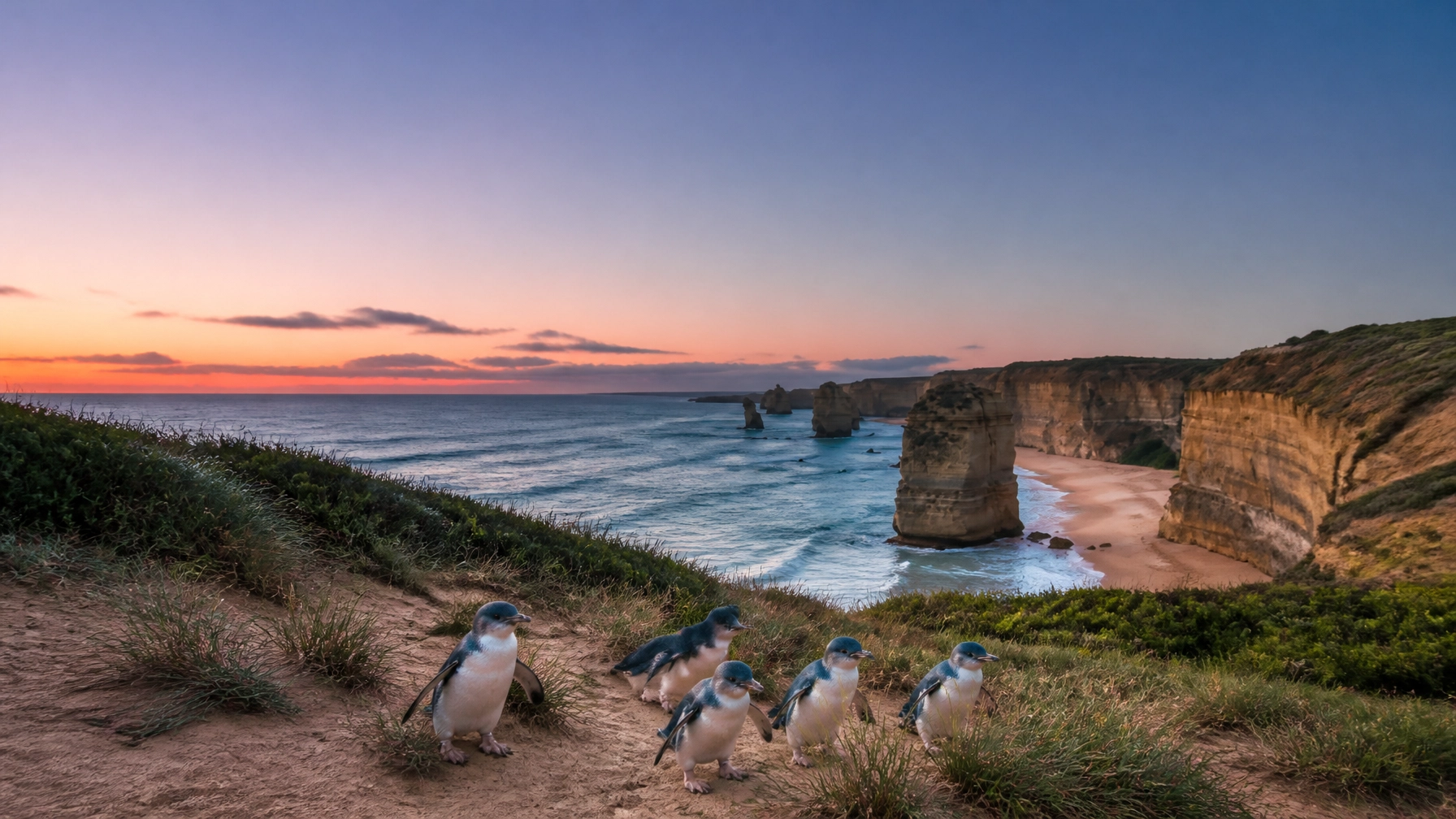
Phillip Island Penguin Parade from Melbourne: Spring Twilight, Wild Surf & the Ultimate Coastal Adventure
Meta description: Chase spring surf, wildflowers, coastal wildlife and the famous Phillip Island penguin parade on an unforgettable day trip from Melbourne.
If you are searching for a Melbourne winter or spring day trip with wildlife, ocean adventure and a spectacular finale, Phillip Island is calling. In September, the island feels wonderfully untamed: Bass Strait sends powerful surf against the cliffs, coastal heath begins to brighten with spring wildflowers, seabirds return to their nesting grounds and little penguins prepare for their nightly journey home.
We collect you from Melbourne, leave the city behind and shape the day around the island’s best wildlife and coastal experiences. By twilight, you will be settled above Summerland Beach, waiting for one of Victoria’s most famous natural spectacles: the Phillip Island penguin parade.
Phillip Island Day Trip Fast Facts
- Departure: Morning pickup from Melbourne, usually around 8:30–9:30 am depending on your itinerary
- Travel time: Allow approximately 1.5–2 hours each way
- Season: September spring, with crisp mornings and cool coastal evenings
- Main highlights: Cape Woolamai, spring wildflowers, surf beaches, The Nobbies, wildlife encounters and the Penguin Parade
- Penguin arrival: At sunset; early September evenings are often around 6:15–6:45 pm, but check the official Penguin Arrival Calendar
- Return to Melbourne: Usually late evening, approximately 10:00–11:00 pm
- Best for: Backpackers, young travellers, families, international visitors and private groups
- Essential booking tip: Penguin Parade tickets must be booked in advance
Phase One: Morning Pickup from Melbourne and the Road to the Island
Our adventure begins with a convenient Melbourne pickup, giving you time to settle in, meet your fellow travellers and watch the urban landscape give way to open farmland and coastal bushland.
Phillip Island is around 140 kilometres southeast of Melbourne. The drive takes approximately 1.5–2 hours in normal conditions, although we recommend allowing extra time on weekends, public holidays and school holidays. Once we cross the bridge at San Remo, the atmosphere changes immediately. Saltmarsh, low coastal vegetation and broad skies replace city streets.
This is where travelling with a local team makes a difference. The island’s best experiences are spread across different corners of the coast, and the evening schedule is controlled by sunset. We manage the timing, driving and stops so you can focus on the adventure instead of watching the clock.
Phase Two: Cape Woolamai, Spring Flowers and Wild Surf
Our first major coastal stop is Cape Woolamai, one of Phillip Island’s most spectacular headlands. Granite cliffs rise above Bass Strait, walking tracks wind through coastal heath and the ocean stretches endlessly towards the horizon.
September brings a fresh energy to the landscape. Look closely along the walking trails and you may see flowering coastal plants, bright new growth and seabirds moving across the cliffs. Cape Woolamai is also famous for its short-tailed shearwater colony, one of Victoria’s most important seabird habitats.
The surf is often powerful in spring. Even if you are not getting in the water, watching the sets break below the cliffs is an unforgettable experience. The beach and headland offer space to breathe, take photographs and feel the force of the Southern Ocean.
Insider knowledge: Cape Woolamai is not just a scenic viewpoint. It is an important wildlife habitat, so we stay on marked tracks, keep our distance from birds and avoid disturbing burrows or nesting areas.

After the walk, we can pause for lunch in Cowes or at another suitable island stop. Cowes is Phillip Island’s main township, with cafés, takeaway options and a relaxed seaside atmosphere: ideal for refuelling before the afternoon’s wildlife experiences.
Phase Three: Koalas and Phillip Island Wildlife
Phillip Island is much more than the Penguin Parade. The island supports a remarkable range of native wildlife, including koalas, fur seals, short-tailed shearwaters and many coastal bird species.
If your itinerary includes it, the Koala Conservation Reserve is a peaceful way to experience Australian wildlife among eucalyptus woodland. Elevated boardwalks allow you to look for koalas without entering their habitat. You may find one resting high in a forked branch, another feeding quietly on leaves or a curious face peering down from the canopy.

Spring is a particularly enjoyable time for walking through the reserve. Daylight lasts longer than in winter, temperatures are generally comfortable and the bushland begins to feel alive with new growth.
We always encourage responsible wildlife viewing:
- Stay on designated boardwalks and paths.
- Never feed or touch wild animals.
- Keep voices low near koalas and nesting birds.
- Use binoculars or zoom rather than moving closer.
- Follow ranger instructions at every attraction.
Phillip Island’s wildlife experiences are successful because conservation comes first.
Phase Four: The Nobbies, Seal Rocks and the Wild Southern Ocean
By the afternoon, we head towards The Nobbies, a dramatic headland on Phillip Island’s western tip. The clifftop boardwalk follows the edge of the Southern Ocean, with waves exploding against rocky outcrops below.
In spring, the surf can be spectacular. Wind pushes sea spray across the cliffs, seabirds ride the updrafts and the water changes from deep blue to silver beneath the afternoon sun. Offshore, Seal Rocks is home to Australia’s largest colony of fur seals. The seals can be difficult to see with the naked eye, but viewing points and local knowledge help you scan the rocks and ocean.

The Nobbies is also a great place to appreciate Phillip Island’s conservation history. The Summerland Peninsula was once threatened by development and holiday homes, but large-scale restoration returned valuable habitat to the penguin colony. Today, the boardwalks allow visitors to experience this coastline while keeping fragile dunes and wildlife areas protected.
Spring walking tip: Wear a windproof outer layer at The Nobbies. The afternoon can feel mild in the sunshine, but exposed headlands become cold quickly once the wind strengthens.
Phase Five: Twilight at the Phillip Island Penguin Parade
As daylight fades, we make our way to the Phillip Island Nature Parks Penguin Parade. This is the moment everything has been building towards.
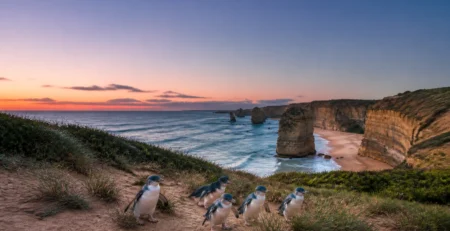
Little penguins spend the day fishing offshore. At sunset, they gather beyond the waves before returning to land in small groups. One moment the beach appears empty; then a line of tiny figures emerges from the surf and begins waddling towards the dunes.
Phillip Island is home to the largest little penguin colony in the world, and the nightly return is one of Australia’s most famous wildlife experiences. The penguins are small, determined and completely wild. Watching them navigate the beach and make their way towards their burrows is both funny and deeply moving.
The best viewing strategy
- Arrive at the visitor centre approximately one hour before penguin arrival time.
- For an early September visit, this may mean arriving around 5:15–5:30 pm.
- General Viewing offers a broad view across Summerland Beach.
- Penguins Plus provides a closer grandstand experience.
- Underground Viewing lets you watch penguins pass near the viewing windows.
- After the first groups arrive, use the designated boardwalks to watch them continue towards their burrows.
- Remain seated or behind barriers when staff ask you to.
- Allow at least 60–90 minutes for the full viewing experience.
The exact arrival time changes daily with sunset, so always check the official calendar before travelling. The visitor centre is open daily and includes facilities, food and retail options.
The important photography rule
Photography and filming are not permitted during the Penguin Parade. This includes cameras, video cameras, phones and flash photography. Little penguins have sensitive eyes, and artificial light can frighten or disorient them.
You can take photographs around the visitor centre and coastal areas before sunset, but once the penguins begin coming ashore, put your phone away. The best souvenir is the memory of watching the parade without a screen between you and the wildlife.
What to Pack for a Spring Evening
September can feel like two seasons in one day. Cape Woolamai may be bright and energetic in the afternoon, while the Penguin Parade can be cold, windy and damp after sunset.
Bring:
- Warm jumper or fleece
- Windproof or waterproof jacket
- Long pants
- Closed-toe walking shoes
- Beanie, scarf and light gloves
- Reusable water bottle
- Small umbrella or rain shell
- Portable phone charger
- Binoculars, if available
A small blanket or travel rug can also make the viewing seats more comfortable. Avoid bright torches and phone lights around the penguins, and follow all ranger instructions.
Why Choose a Guided Phillip Island Trip from Melbourne?
A self-drive day is possible, but a guided experience removes the stressful parts: navigating unfamiliar roads, calculating sunset times, finding wildlife stops and driving back to Melbourne late at night.
With Great Ocean Road Trip Melbourne, we can help you combine wildlife, coastal walks and adventure in one carefully planned day. Choose a group experience, ask about a private or group charter or browse our wider Melbourne tour collection.
From spring flowers at Cape Woolamai to wild surf at The Nobbies and the unforgettable moment little penguins appear on the beach, Phillip Island delivers a full day of spectacular Victorian nature.
Ready to experience the Phillip Island penguin parade from Melbourne? Contact our team and let us plan your coastal adventure.
Pack your layers, bring your sense of adventure and prepare to watch the island come alive at twilight.


Leave a Reply
You must be logged in to post a comment.