12 Apostles Sunset Tour from Melbourne: Golden Hour at Victoria’s Iconic Limestone Giants
Meta description: Chase golden hour on a 12 Apostles tour from Melbourne, with Bells Beach, the Great Otway rainforest, Gibson Steps and Loch Ard Gorge before an unforgettable winter sunset.
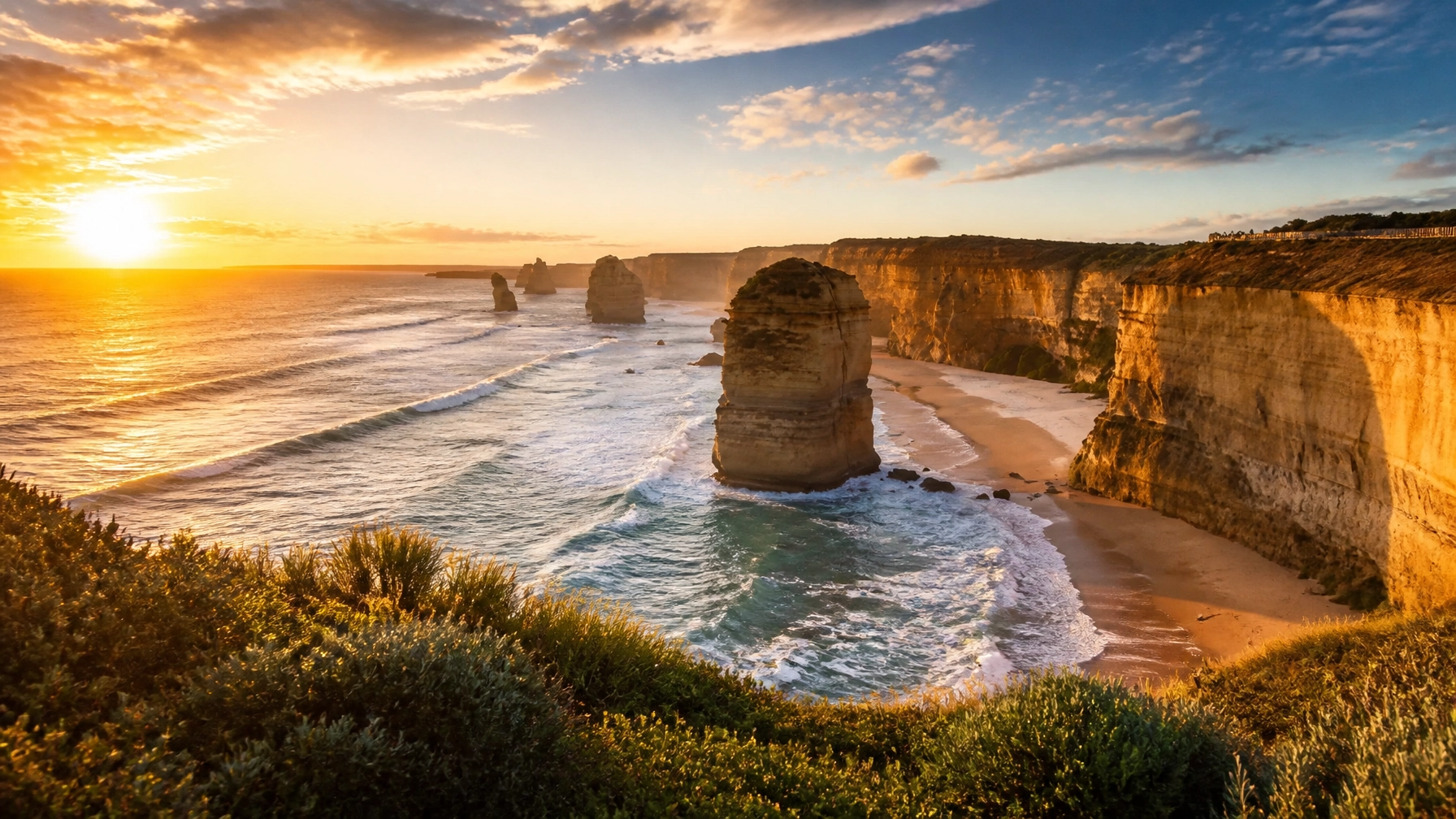
There is something powerful about seeing the 12 Apostles at sunset. During the day, the famous limestone stacks rise dramatically from the Southern Ocean. As the afternoon fades, the crowds thin, the wind sharpens and the last sunlight turns the cliffs from pale grey to rich gold.
Our sunset journey is designed for travellers who want more than a quick photograph and a rushed walk around a lookout. We follow the Great Ocean Road from Melbourne through surf beaches, rainforest and the rugged Shipwreck Coast, arriving at Victoria’s most iconic natural landmark just in time for golden hour.
If you are searching for unforgettable Melbourne winter day trips, this is a full-day adventure with a spectacular finale.
Morning departure: Melbourne to the Great Ocean Road
We leave Melbourne in the morning, generally around 9:00–10:00 am during winter, giving us time to travel west at a comfortable pace and reach the Twelve Apostles late in the afternoon.
The journey is part of the experience. As the city gives way to green farmland and coastal towns, our local guides share stories about the road, the region’s wildlife and the powerful forces that shaped Victoria’s southern coastline.
At a glance
- Duration: Full day, with a late return to Melbourne
- Typical return: Approximately 9:00–11:00 pm, depending on conditions and the date
- Best season: Late autumn through winter for cooler weather and fewer crowds
- Ideal for: Photographers, international visitors, couples, friends and adventurous small groups
- Tour style: Group departures or flexible private and group charter options
Because sunset changes throughout the year, our exact schedule is adjusted seasonally. In late August, sunset near the Twelve Apostles is usually around 5:30–5:45 pm, with the warmest photographic light beginning roughly an hour beforehand.
First coastal stop: Bells Beach
Our first major coastal stop is Bells Beach, one of Australia’s most famous surf beaches and a celebrated location on the Great Ocean Road.
Even in winter, the beach has an unmistakable energy. Swells roll in from the Southern Ocean, surfers scan the horizon and the sandstone cliffs catch the changing morning light. The beach is also internationally known through the Rip Curl Pro, one of the world’s longest-running professional surfing competitions.
We take time to enjoy the view, breathe in the salt air and watch the waves break below the cliffs. Bells Beach is a reminder that the Great Ocean Road is not simply a route to the Twelve Apostles: it is a living coastal landscape with its own rhythm and character.
For many visitors, this is the moment the day truly begins.
Through the Great Otway National Park
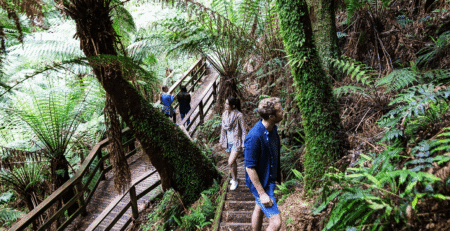
From the coast, the road turns through the lush landscapes of Great Otway National Park. The contrast is remarkable: one moment we are looking across an open ocean, and the next we are surrounded by towering eucalyptus trees, tree ferns, moss-covered branches and cool, damp rainforest.

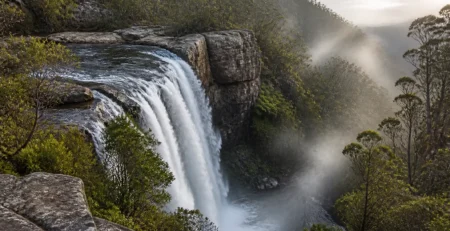
Late winter is an excellent time to experience the Otways. Rain brings fresh colour to the forest, small cascades become more animated and the air feels crisp and deeply green. Keep your eyes open for native birdlife, wallabies and the occasional koala in the surrounding gum trees.
Our guides help you slow down here. A short rainforest walk gives you the chance to stretch your legs, listen to the forest and experience a completely different side of Victoria’s famous coastal route.
This transition from ocean to rainforest is one of the reasons a Great Ocean Road winter tour feels so adventurous. You are not visiting one attraction: you are moving through several distinct environments in a single day.
Apollo Bay: coastal scenery and a relaxed break
As we continue towards Apollo Bay, the Great Ocean Road hugs the coastline, winding past quiet beaches and steep green hills. This section is among the most scenic drives in Australia, with wide ocean views appearing between bends in the road.
We pause in or around Apollo Bay for a relaxed break and time to enjoy the local atmosphere. Depending on your tour package, this is an ideal opportunity to organise lunch, coffee or a warm drink before the more dramatic cliffs of the Shipwreck Coast.
Winter days can feel cool along the coast, but that is part of the appeal. Fewer visitors, moody cloud formations and bright breaks of sunlight often create more atmospheric views than a perfectly clear summer day.
Gibson Steps: down to the Southern Ocean
In the afternoon, we reach Gibson Steps, where a narrow staircase leads towards the beach beneath towering limestone cliffs.

From the shoreline, the cliffs feel enormous. Layers of rock rise around you, shaped by millions of years of wind, rain and powerful Southern Ocean swells. Offshore, the formations known as Gog and Magog stand apart from the main Twelve Apostles group.
This is a spectacular place for photographs, but it is also a place to respect the coast. Conditions can change quickly, and the beach should only be visited when it is safe. We follow local guidance, keep clear of cliff edges and never turn our backs on the ocean.
Gibson Steps gives you a different perspective from the main Apostles lookout: one that makes the scale of the cliffs and stacks feel immediate and unforgettable.
Loch Ard Gorge: history written into the cliffs
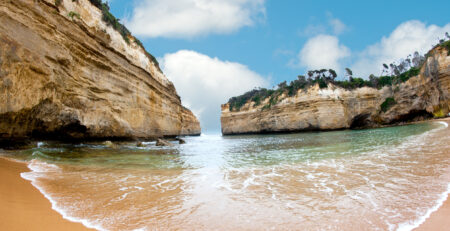
Next, we explore Loch Ard Gorge, one of the most famous locations along the Shipwreck Coast. Dramatic limestone walls frame a sheltered stretch of sand and vivid water, while walking tracks lead to lookouts over caves, cliffs and ocean.

The gorge takes its name from the clipper ship Loch Ard, which ran aground near nearby Muttonbird Island in 1878. Of the more than 50 people aboard, only two teenagers, Tom Pearce and Eva Carmichael, survived. Their story is one of the best-known chapters in Victoria’s maritime history.
Our local guides bring this history to life while you explore the gorge. The cliffs are beautiful, but they also reveal why this coastline became known as the Shipwreck Coast. Beneath the scenic lookouts is a wild maritime environment that has challenged sailors for generations.
Allow yourself time here to look beyond the obvious view. Notice the layers in the limestone, the caves carved by the sea and the changing colour of the water as afternoon light moves across the gorge.
The grand finale: golden hour at the 12 Apostles
We time the final stretch of our journey to arrive at the 12 Apostles for golden hour, usually around 4:30–5:00 pm in late August.

At the main viewing area, the limestone pillars stand offshore against the open Southern Ocean. As the sun drops lower, warm light catches their vertical faces while the cliffs behind you deepen into bronze and shadow. The colours can shift minute by minute: from soft cream to gold, amber and rose.
This is why sunset is such a memorable time to visit. The busiest part of the day has passed, giving you more space to enjoy the view and compose your photographs. You can watch the landscape change rather than simply arrive, snap and leave.
Insider history: why are they called the Twelve Apostles?
The name has a fascinating history. Early European visitors referred to the formations as the “Sow and Piglets”, with Muttonbird Island representing the sow and the smaller offshore rocks representing the piglets.
The name “Twelve Apostles” appeared in historical usage by the late nineteenth century and was strongly promoted for tourism in the 1920s. The memorable name helped draw travellers along the Great Ocean Road, even though the main group never contained twelve separate stacks in the modern era.
Today, seven of the original nine main stacks remain standing. One collapsed in 2005 and another fell in 2009. The changing coastline is a powerful reminder that these “giants” are not permanent monuments: they are still being shaped by the ocean.
Winter photography tips for the Twelve Apostles
To make the most of your sunset adventure, we recommend bringing:
- A thermal or long-sleeved base layer
- Fleece or warm mid-layers
- A windproof and waterproof jacket
- Beanie, scarf and gloves
- Comfortable waterproof walking shoes
- A camera, spare battery and lens cloth
- A small backpack or dry bag for electronics
For photographs, arrive at the lookout before the best light begins. A wide-angle lens is ideal for sweeping coastline views, while a short telephoto lens can isolate the stacks and compress the layers of cliffs and ocean.
Do not pack away immediately after the sun disappears. The period after sunset can bring rich blue-hour colour, softer contrast and even fewer people around the platforms.
A light note for wildlife lovers: winter is also a seasonal opportunity for 12 Apostles whale watching along parts of the coast. Sightings are never guaranteed, but keep an eye on the Southern Ocean during stops: especially if your guide spots activity offshore.
Book your sunset adventure from Melbourne
A 12 Apostles tour from Melbourne lets us handle the long-distance driving, timing and route planning while you focus on the experience. From Bells Beach and the Otways to Gibson Steps, Loch Ard Gorge and the glowing limestone stacks, every stage builds towards an unforgettable coastal finale.
Explore our 1 Day Great Ocean Road tour options or choose a more flexible private Great Ocean Road experience for your own group.
Bring your warmest layers, charge your camera and prepare for a day of wild beaches, rainforest air, dramatic cliffs and golden light. When the last sun touches the Twelve Apostles, you will understand why this remains one of Victoria’s most famous and spectacular journeys.


Leave a Reply
You must be logged in to post a comment.